Beer undergoes fermentation and is a liquid beverage made from starch, flavored with hops. Before the widespread use of hops, beer obtained its bitterness and flavor from mixtures of spices and herbs known as 'gruit.'
Hops, a perennial plant regrowing annually from underground rhizomes, are essential ingredients in beer, alongside barley, yeast, and water. Common hop varieties include Willamette, Tettnanger, Cascade, and Centennial. Hops play a crucial role in beer, providing bitterness to balance malt sugars' sweetness. They also contribute flavors, aromas, resins for head retention, and act as antiseptics to prevent spoilage.
Key chemical components of hops include alpha acids, contributing to beer bitterness and preventing bacterial growth, and beta acids with potent antimicrobial properties. Essential oils from hops add aromas and flavors to beers and ales.
Aroma hops contribute distinctive smell and taste characteristics to beer. Besides taste, craft beers widely incorporate hops for their antimicrobial properties. Hops are essential for stabilizing beer foam, while the breakdown of hop-derived components leads to a critical off-flavor in beer known as light-struck flavor.
Hops may contribute up to about one-third of the total polyphenols in beer, existing in various forms such as monomers, dimers, trimers, and more complex structures associated with nitrogenous components.
Hop Essentials in Beer
Showing posts with label flavor. Show all posts
Showing posts with label flavor. Show all posts
Sunday, December 17, 2023
Monday, March 07, 2022
Taste of tea
Taste of tea can be determined by many factors – from a tea cultivar and chemical composition to production technique and freshness of tea leaves, and also, the way how the tea was brewed.
The oxidation products such as theaflvins and therubigins contribute to tea color and taste of the black tea. Tea is the product of its environment; how the tea is grown and how it is processed. These variables make each tea unique and give it body, character, aroma (and health properties).
The flavor of tea is principally determined by the chemical components it contains. Volatile compounds contribute to the aroma and non-volatile compounds to the taste.
The principal components which determine the aroma, flavor and physiological action of tea are:
*An essential oil: about 0.5%, this is probably formed during fermentation.
*Caffeine: 1.8 to 5.9%. Caffeine (1, 3, 7-trimethylxanthine) is one of the major alkaloids in tea.
*Flavonoids, which were previously called tea tannins or tea polyphenols, are the main phenolic compounds comprising 20–40% of dry matter in young shoots of tea plants. The characteristics of made tea, including colour, taste, and aroma, are directly or indirectly associated with these phenolic compounds.
There are about 140 components have been reported as contributing to the aroma and flavor of tea. Chlorophyll, carotenoids, lipids and volatile compounds are not major constituents in a tea brew but they also play an important role in the development of the aroma.
The odor of the tea liquor, also called the nose or fragrance. A complex aroma is often described as a bouquet.
Caffeine together with black tea polyphenols was necessary for the expression of reasonable amounts of tangy astringency. Astringency is a lively and mouth-drying effect on the tongue. The sensation of astringency is caused by a reaction between polyphenols (tannins) and the protein in saliva. Decaffeination may change the nature of astringency from tangy to non-tangy type.
The chemical composition of tea depends on the following factors: genetic strain, climatic conditions, soil, growth altitude and horticultural practices, the plucking season, sorting (grading) of the leaves, the processing, storage, etc.
The aim of making good tea is to obtain the maximum extraction of caffeine. Most commercially available teas are blends, designed to satisfy the tastes of the customer.
Taste of tea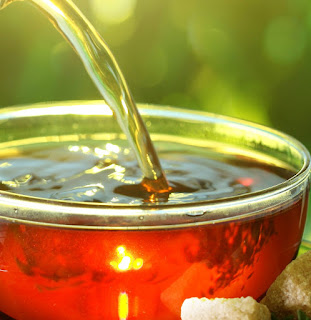
The oxidation products such as theaflvins and therubigins contribute to tea color and taste of the black tea. Tea is the product of its environment; how the tea is grown and how it is processed. These variables make each tea unique and give it body, character, aroma (and health properties).
The flavor of tea is principally determined by the chemical components it contains. Volatile compounds contribute to the aroma and non-volatile compounds to the taste.
The principal components which determine the aroma, flavor and physiological action of tea are:
*An essential oil: about 0.5%, this is probably formed during fermentation.
*Caffeine: 1.8 to 5.9%. Caffeine (1, 3, 7-trimethylxanthine) is one of the major alkaloids in tea.
*Flavonoids, which were previously called tea tannins or tea polyphenols, are the main phenolic compounds comprising 20–40% of dry matter in young shoots of tea plants. The characteristics of made tea, including colour, taste, and aroma, are directly or indirectly associated with these phenolic compounds.
There are about 140 components have been reported as contributing to the aroma and flavor of tea. Chlorophyll, carotenoids, lipids and volatile compounds are not major constituents in a tea brew but they also play an important role in the development of the aroma.
The odor of the tea liquor, also called the nose or fragrance. A complex aroma is often described as a bouquet.
Caffeine together with black tea polyphenols was necessary for the expression of reasonable amounts of tangy astringency. Astringency is a lively and mouth-drying effect on the tongue. The sensation of astringency is caused by a reaction between polyphenols (tannins) and the protein in saliva. Decaffeination may change the nature of astringency from tangy to non-tangy type.
The chemical composition of tea depends on the following factors: genetic strain, climatic conditions, soil, growth altitude and horticultural practices, the plucking season, sorting (grading) of the leaves, the processing, storage, etc.
The aim of making good tea is to obtain the maximum extraction of caffeine. Most commercially available teas are blends, designed to satisfy the tastes of the customer.
Taste of tea


Saturday, October 05, 2019
Flavor of sarsaparilla in beverages
All bottled soft drinks contain water, flavor, sweetening, and carbon
dioxide gas. The flavors for soft drinks include ginger ale,
sarsaparilla, root beer, birch beer, chocolate, cream, colas, cherry,
wild cherry, lemon, strawberry, raspberry, orange, pineapple grape,
loganberry, apple, pear, peach, and others less widely distributed.
Nearly all bottled soft drinks are colored artificially. Sarsaparillas ordinarily are colored with caramel, which is made by carefully heating sugar or glucose. Sarsaparilla produces small flowers and black, blue, or red berry-like fruits which are eaten greedily by birds. Smilax, a member of the lily family, is a genus of about 350 species, found in temperate, tropical and subtropical zones worldwide.
The plants belonging to this genus are found throughout Asia, Europe, Oceania and the Americas. The name sarsaparilla or zarzaparilla comes from the Spanish word zarza (bramble or bush), parra (vine), and illa (small)—a small, brambled vine. Sarsaparilla root was used as a general tonic by indigenous tribes in South America, where New World traders found it and introduced it into European medicine in the 1400s.
The roots of sarsaparilla contain a high concentration of nutrients and organic compounds that can be added to soups, stews, herbal supplements, drinks, and desserts.
Flavor of sarsaparilla in beverages

Nearly all bottled soft drinks are colored artificially. Sarsaparillas ordinarily are colored with caramel, which is made by carefully heating sugar or glucose. Sarsaparilla produces small flowers and black, blue, or red berry-like fruits which are eaten greedily by birds. Smilax, a member of the lily family, is a genus of about 350 species, found in temperate, tropical and subtropical zones worldwide.
The plants belonging to this genus are found throughout Asia, Europe, Oceania and the Americas. The name sarsaparilla or zarzaparilla comes from the Spanish word zarza (bramble or bush), parra (vine), and illa (small)—a small, brambled vine. Sarsaparilla root was used as a general tonic by indigenous tribes in South America, where New World traders found it and introduced it into European medicine in the 1400s.
The roots of sarsaparilla contain a high concentration of nutrients and organic compounds that can be added to soups, stews, herbal supplements, drinks, and desserts.
Flavor of sarsaparilla in beverages

Sunday, May 06, 2018
Vanilla flavor for beverages
The only orchid that bears an edible fruit Vanilla planifolia is a climbing evergreen perennial vine native to Mexico, Central and South America and the West Indies.
Vanilla has a thick, succulent stem and bears brought green, pointed leaves and clusters of showy, pale greenish yellow flowers. The familiar vanilla fragrance develops only after the bean has ripened and fermented. During fermentation, the chemical compounds in beans breakdown and form new compounds.
Vanilla extract is complex mixture extracted from the vanilla bean, where the major components contributing to the rich characteristics bouquet and flavor essentially, vanillin and about five other, with some trace components likely important from other 200 components in the bean.
The main application of natural vanilla is for flavoring ice creams and soft drinks. Vanilla is an important flavour component in colas and is also in cream sodas, root beer, some fruit beverages, tea and coffee.
Vanillin or vanilla flavors are used in many alcoholic beverages, such as whiskeys, cordials and cocktails, to round out and smooth the harsh edges of the alcohol.
Vanilla flavor for beverages
Vanilla has a thick, succulent stem and bears brought green, pointed leaves and clusters of showy, pale greenish yellow flowers. The familiar vanilla fragrance develops only after the bean has ripened and fermented. During fermentation, the chemical compounds in beans breakdown and form new compounds.
 |
| Vanilla planifolia |
The main application of natural vanilla is for flavoring ice creams and soft drinks. Vanilla is an important flavour component in colas and is also in cream sodas, root beer, some fruit beverages, tea and coffee.
Vanillin or vanilla flavors are used in many alcoholic beverages, such as whiskeys, cordials and cocktails, to round out and smooth the harsh edges of the alcohol.
Vanilla flavor for beverages
Saturday, April 23, 2016
Darjeeling tea – Champagne of tea
 Darjeeling, a hill station on the Himalaya, is situated at an altitude of 7000 feet. It produced the world’s finest tea which has often been called the ‘champagne of tea’.
Darjeeling tea is what it is because of its quality, reputation and characteristics, all of which are essentially attributable to its geographical origin.
Indian Darjeeling tea enjoys a reputation as one of the best teas for flavor and quality. For probably more than 150 years it has been grown and produced in privately owned tea gardens.
The tea is grown at various altitudes up to 6,500 feet although the average is between 3,000 and 4,000 feet.
Darjeeling tea that is worthy of its name cannot be grown or manufactured anywhere else in the world. It cannot be replicating anywhere. It is protected by the Tea Board and the Ministry of Commerce under the norms of the TRIPS Agreement of the WTO.
Darjeeling teas are characterized by the presence of an abundance of fine hairy growth on the underside of the leaf on the bud and sometimes even on the stalk. This pubescence is called ‘tip’ and it is the ‘tippy’ teas that denote quality.
Darjeeling tea – Champagne of tea
Wednesday, May 20, 2015
What are powdered drinks?
Powdered drinks required mixing by the individual and avoid the inconvenience of transporting large volumes of liquid. However, this type of product is not suited to support the retention of volatile components, including coffee aromas, esters, acetaldehyde, essential oils, and sulfur compounds, which reduces the experience of freshness.
Most powdered drinks dissolve quickly when combined with water. Fortified powdered drinks offer a convenient alternative to smoothies and other nutritional beverages.
Extracts dried on to a water-soluble base are useful in the preparation of powdered drinks. Soft extracts tend to contain about 70% solid matter and can be mixed into slurry with the substrate and spray-dried or dried in a vacuum oven.

The substrate is usually essential to prevent to dried extract from reabsorbing moisture and turning back into a hard or sticky mass. Granulated sugar is the leading sweetener for these products because of its low level of nonsucrose materials, heat and microbiological stability, uniform bulk density, controlled grain size and flavor consistency.
Powdered drinks come in a variety of flavors and styles. While whey protein powder is one of the more common powdered beverages, powdered drinks can be made using a multitude of fruits, vegetables, herbs and other ingredients.
Among powdered drinks include: lemonade, iced green tea and honey. Orange flavored powdered drinks and powdered lemonade are easier than soda to carry.
The market for powdered drink mixes has been growing faster than the liquid beverage market due to the convenience of instant team dry fruit-lavored mixes and similar product.
What are powdered drinks?
Most powdered drinks dissolve quickly when combined with water. Fortified powdered drinks offer a convenient alternative to smoothies and other nutritional beverages.
Extracts dried on to a water-soluble base are useful in the preparation of powdered drinks. Soft extracts tend to contain about 70% solid matter and can be mixed into slurry with the substrate and spray-dried or dried in a vacuum oven.

The substrate is usually essential to prevent to dried extract from reabsorbing moisture and turning back into a hard or sticky mass. Granulated sugar is the leading sweetener for these products because of its low level of nonsucrose materials, heat and microbiological stability, uniform bulk density, controlled grain size and flavor consistency.
Powdered drinks come in a variety of flavors and styles. While whey protein powder is one of the more common powdered beverages, powdered drinks can be made using a multitude of fruits, vegetables, herbs and other ingredients.
Among powdered drinks include: lemonade, iced green tea and honey. Orange flavored powdered drinks and powdered lemonade are easier than soda to carry.
The market for powdered drink mixes has been growing faster than the liquid beverage market due to the convenience of instant team dry fruit-lavored mixes and similar product.
What are powdered drinks?
Thursday, September 04, 2014
Coffee aroma and flavor
Each variety of coffee has its own flavor and other characteristics. Generally, marketed coffee is a blend of different varieties of coffee beans.
The blends are controlled for flavor, aroma, color and strength or body of the beverage from the roasted bean.
It has been established, primarily from gas chromatography evidence, that there are nearly 1000 different more or less volatile compounds present in roasted coffee.
Most results from the thermal decomposition of carbohydrates and phenols, especially chlorogenic acids that are present at significant concentrations in green beans during roasting.
Some compounds are located in the carbohydrate matrix of the roasted bean whereas others are located in the coffee oil distributed within the bean.
Heterocyclic aroma chemicals, which are major constituents of a brewed coffee extract possessed considerable antioxidants activities.
The flavor and aroma of coffee are best when it is freshly roasted. Many of the aromatic components of roasted coffee, and particularly of coffee oil itself, are extremely susceptible to deterioration by the action of moisture and oxygen.
The staleness of coffee exposed to air is due to the oxidative changes that take place with certain coffee constituents.
The major factor affecting coffee quality is the length of storage, as volatile aroma compounds are lost, especially from ground coffee, with methanethiol and 2,3-pnentanedione being used as indicators of coffee freshness, because they are rapidly lost on storage, especially the 2,3-pentanedione.
Coffee aroma and flavor
The blends are controlled for flavor, aroma, color and strength or body of the beverage from the roasted bean.
It has been established, primarily from gas chromatography evidence, that there are nearly 1000 different more or less volatile compounds present in roasted coffee.
Most results from the thermal decomposition of carbohydrates and phenols, especially chlorogenic acids that are present at significant concentrations in green beans during roasting.
Some compounds are located in the carbohydrate matrix of the roasted bean whereas others are located in the coffee oil distributed within the bean.
Heterocyclic aroma chemicals, which are major constituents of a brewed coffee extract possessed considerable antioxidants activities.
The flavor and aroma of coffee are best when it is freshly roasted. Many of the aromatic components of roasted coffee, and particularly of coffee oil itself, are extremely susceptible to deterioration by the action of moisture and oxygen.
The staleness of coffee exposed to air is due to the oxidative changes that take place with certain coffee constituents.
The major factor affecting coffee quality is the length of storage, as volatile aroma compounds are lost, especially from ground coffee, with methanethiol and 2,3-pnentanedione being used as indicators of coffee freshness, because they are rapidly lost on storage, especially the 2,3-pentanedione.
Coffee aroma and flavor
Wednesday, February 05, 2014
What is the definition for Sherry wine?
Sherry is one of the most famous dessert wines. It is produced in Spain.
Sherry evolved into its near-present-day form in southern Spain possibly as late as the early 1800s.
In Spain, the designation Sherry is used as a geographically appellation. It is restricted to wines produced in and around Jerez de la Frontera in Andalucía.
Sherry is considered one of the nest wines and is produced mainly for export. Sherry is a fortified wine and a blend. The special characteristics of Sherry are governed by the climate, soil and the process of vinification.
The wine is produced by the shippers rather than by individual growers, although the shippers now own large vineyards themselves. The smaller growers are therefore only interested in the wine up to the pressing of the grapes. From then on the shipper takes over.
There are two main varieties of grapes to make Sherry: Palomino and Pedro Ximenez.
The defining characteristics of Sherry is that it is purposely oxidized, making it high in acetaldehyde, which is the result of the reaction of ethanol and oxygen.
This gives Sherry wines their distinctive roasted nut aroma. The flavor of Sherry is produced during the aging process so, like sparkling wines, a fairly neutral wine is desired as a base for Sherry.
What is the definition for Sherry wine?
Sherry evolved into its near-present-day form in southern Spain possibly as late as the early 1800s.
In Spain, the designation Sherry is used as a geographically appellation. It is restricted to wines produced in and around Jerez de la Frontera in Andalucía.
Sherry is considered one of the nest wines and is produced mainly for export. Sherry is a fortified wine and a blend. The special characteristics of Sherry are governed by the climate, soil and the process of vinification.
The wine is produced by the shippers rather than by individual growers, although the shippers now own large vineyards themselves. The smaller growers are therefore only interested in the wine up to the pressing of the grapes. From then on the shipper takes over.
There are two main varieties of grapes to make Sherry: Palomino and Pedro Ximenez.
The defining characteristics of Sherry is that it is purposely oxidized, making it high in acetaldehyde, which is the result of the reaction of ethanol and oxygen.
This gives Sherry wines their distinctive roasted nut aroma. The flavor of Sherry is produced during the aging process so, like sparkling wines, a fairly neutral wine is desired as a base for Sherry.
What is the definition for Sherry wine?
Wednesday, September 21, 2011
Flavored water
Flavored water may have just a hint of flavor, derived from a natural fruit essence. The technology of flavored waters is simple and involves little more than mixing and blending.
The presence of additional nutrient sources and the increased microbial load due to microorganisms derived from ingredient often means that heat treatment is required stability.
This may be applied in bottle, or more commonly on a continuously basis using a plate heat exchanger.
Flavored water is a lightly favored beverages with few or no calories, but often containing vitamins, minerals, herbs or other unneeded substances. Not superior to plain water for athletic competition or training.
A number of flavors combinations have been devised, which are aimed at sophisticated adults and which are seen, at least partially as substitutes for alcoholic beverages.
Flavored water can be alternative for people making the switch from soft drinks. Add fruit slices like lemons, oranges or even lime on the water for a refreshing drink.
Need to read labels on flavored water because some of these waters contain a lot of sugar and artificial ingredients which defeat the purpose of drinking water.
These drinks typically contain juices such as peach, which have a relatively subtle flavor, as well as herb extracts to provide a flavor contrast.
The sweetness of a drink is a major factor in its palatability, but people differ in their preferred flavor. Flavor preference depends on various factors, including ethnic and cultural backgrounds.
The best thing for quenching the thirst is good old plain water. If preferred to drink flavored water, avoid the ones with sugar or sugar substitutes to sweeten them.
Flavored water
The presence of additional nutrient sources and the increased microbial load due to microorganisms derived from ingredient often means that heat treatment is required stability.
This may be applied in bottle, or more commonly on a continuously basis using a plate heat exchanger.
Flavored water is a lightly favored beverages with few or no calories, but often containing vitamins, minerals, herbs or other unneeded substances. Not superior to plain water for athletic competition or training.
A number of flavors combinations have been devised, which are aimed at sophisticated adults and which are seen, at least partially as substitutes for alcoholic beverages.
Flavored water can be alternative for people making the switch from soft drinks. Add fruit slices like lemons, oranges or even lime on the water for a refreshing drink.
Need to read labels on flavored water because some of these waters contain a lot of sugar and artificial ingredients which defeat the purpose of drinking water.
These drinks typically contain juices such as peach, which have a relatively subtle flavor, as well as herb extracts to provide a flavor contrast.
The sweetness of a drink is a major factor in its palatability, but people differ in their preferred flavor. Flavor preference depends on various factors, including ethnic and cultural backgrounds.
The best thing for quenching the thirst is good old plain water. If preferred to drink flavored water, avoid the ones with sugar or sugar substitutes to sweeten them.
Flavored water
Subscribe to:
Posts (Atom)
Top articles this week
-
 Airag, or Ayrag, is the traditional Mongolian fermented mare's milk alcoholic drink. It is a popular beverage traditionally produced in ...
 -
 Ginger Tea Ginger tea preparations are among the most popular ways to take ginger. To make the tea, boil 10 grams of chopped fresh ginger ...
 -
 The fascinating world of nuruk and its role as a source of saccharogenic enzymes through natural fermentation reveals a profound intersecti...