Technically, any liquid intended for drinking is a beverage so named by a word derived from French and Latin verbs meaning ‘to drink.’ Healthy beverages are beverages with health benefits that attribute by its nutritional value. The use of healthy beverage for promoting health and relieving symptom is as old as the practice of medicine.
Showing posts with label kumiss. Show all posts

Thursday, December 16, 2021

Kumiss - traditional milk beverage

Milk can be fermented by inoculating fresh milk with the appropriate bacteria and incubating it at a temperature that favors their growth.

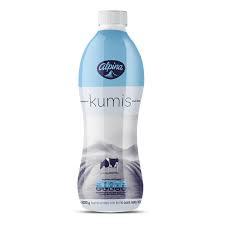
Kumiss, prepared in dry inland Asia, is a traditional milk beverage containing about 2% alcohol, prepared by fermenting raw mare’s milk with lactic acid bacteria and yeast. Kumiss is also known by other names like koumiss, kumis, kymis, kymmyz.

It is an ancient beverage which Scythian tribes (Central Asia Steppes) used to drink some 25 centuries ago is an alcoholic beverage made from fermented mare's milk. This product is unique compared to other dairy foods, due to its mare's milk origin.

The characteristic feature of Kumiss is the fermentation of raw milk, involving the processing of only horse milk.

Kumiss is similar to the kefir; however, it is prepared by a liquid starter culture in contrast to the solid kefir grains used in kefir production.

Kumiss is made by fermenting mare's milk while stirring or churning. It is a dairy product involving lactic acid and alcoholic fermentation, which implies that during the fermentation, Lactobacillus bulgaricus acidifies the milk, and Saccharomyces lactis turns it into a carbonated and mildly alcoholic drink.

Finished kumis is milky white/greyish liquid, sourish alcoholic flavor and frizzy appearance. It is a beverage which does not contain curd particles in it. It has a unique taste, odour and aroma. No foreign odor is available in kumiss other than alcohol odor.

The quality of Kumiss is markedly influenced by factors affecting the quality of horse milk: grass eaten by horses, habitat and microclimate conditions of the herders’ home (temperature).

Kumiss possesses diuretic properties and helps in preventing intestinal putrefaction. The vitamin C level in Kumiss was 8-11 mg/100 ml. Kumiss was a valuable source of vitamin C supply for herders who did not ingest vegetables or fruit.
Kumiss - traditional milk beverage
Wednesday, November 11, 2020

Dairy product of koumiss

Dairy products are prepared from milk of various domestic animals, but horse milk is not appropriate for processing to cheese. Therefore, nomadic peoples have used horse milk for fermentation and production of alcoholic beverage named koumiss. It is consumed both as food as well as an alcoholic drink.

The characteristic feature of koumiss is the fermentation of raw milk, involving the processing of only mares’ milk. A mare is a female horse over the age of three. Koumiss is a fermented drink traditionally made from the milk of horses by people in Central Asia, where it is one of the most important basic foodstuffs.

Although it is an important drink for the peoples of the Central Asian steppes, Bulgar, Turkic, and Mongol origin, it is equally important to the Bashkirs, Kalmyks, Kazakhs, Kyrgyz, Mongols, Uyghurs, and Yakuts. It is a traditional milk beverage produced from fermentation of mares’ milk by indigenous microorganisms.

Processing may play an important role in retaining the active components of mares’ milk, such as antibodies, and have a marked influence on the effect of koumiss.

The method of koumiss preparation involves fermenting milk in smoked horse’s hides, which contain the microflora from the previous season. These containers are filled with unheated mare’s milk, and as the koumiss is consumed, more milk is added to provide an ongoing fermentation.

Fermentation increases digestibility of nutrients and nutritive value and makes nutrients more available for intestinal absorption.

Koumiss contains about 10.6–11.3% total solids, 2.1% protein (1.2% casein and 0.9% whey proteins), 5.5–6.4% lactose, 1.2–1.8% fat, and 0.3% ash.
Dairy product of koumiss

Top articles this week

Food Processing RSS

DBR - Process Technology News

Science of Nutrition RSS