Technically, any liquid intended for drinking is a beverage so named by a word derived from French and Latin verbs meaning ‘to drink.’ Healthy beverages are beverages with health benefits that attribute by its nutritional value. The use of healthy beverage for promoting health and relieving symptom is as old as the practice of medicine.
Showing posts with label fermentation. Show all posts

Monday, May 29, 2023

What is nuruk?

Nuruk is traditional starter culture made from wheat and rice which allows for the growth of various natural types of microorganisms that jump starts fermentation process. Nuruk was first made in Asia in the fifth century BC. It is believed that Nuruk was first used in Korea before the “three kingdoms period,” and records show Nuruk being used for Korean alcohol production in the 1123.

It is used to make various types of Korean alcoholic beverages including takju aka makgeolli, cheongju, and soju. As a determinant factor for flavor, taste, and color of alcoholic beverages, Nuruk is an indispensable ingredient for brewing alcoholic beverages in Korea.

Starch is the main ingredient used for alcohol fermentation, and is first hydrolyzed into glucose through the saccahrification process by fungi. At this time, Nuruk is used as a fermentation agent and is an important raw material for the brewing process.

Nuruk, also called ”Gokja” in Korea, contains naturally occurring and multiplying microorganisms such as wild fungi, yeast, and lactic acid bacteria.

This fermentation starter is a dough made from grains like wheat, barley, or rice that is germinated by microorganisms.

Most Nuruk is made with wheat but it can also be made with rice and barley as well. Most Nuruk manufactures will produce two different types of wheat Nuruk one made with Korean wheat and another made with American wheat.

Typically, Korean wheat used for Nuruk is called anjeung bengi wheat which is a shorter and higher in starch than its American counterpart.
What is nuruk?

Friday, May 05, 2023

Blueberry wine fermentation

Blueberry wine is a high-value processed product from the highly perishable blueberry fruit, which is widely consumed. Blueberry fruit wine, made from blueberry, mainly goes through fruit selection, crushing (sugar added), fermentation, pressing, post fermentation, filtration, bottling and other processes.

Conventionally, winemaker adds rehydrated years (usually Saccharomyces, for more control as soon as the fruit is in the fermenter. Wine yeast (and mead yeast) can play an important role in flavor development. S. cerevisiae is the most common yeast used to carry out alcoholic fermentations in wine production.

The fermentation of blueberry compound wine is affected by many factors, such as initial pH value and sugar content, yeast inoculation, fermentation temperature, fermentation duration, etc.

The fermentation process of blueberry wine can be divided into a main and secondary fermentation stage. Fermentation takes roughly two to three weeks to complete fully, but the initial ferment will finish within seven to ten days.

During main fermentation, yeast propagate and produce ethanol. This dynamic stage also results in the degradation, transformation, generation of new substances and chemical byproducts.

The post fermentation process is predominantly an odor improvement stage during which lactic acid bacteria (LAB) degrade malic acid to produce lactic acid and catalyze additional chemical reactions which influence the aroma of the wine. It helps to let the wine finish anaerobically fermenting, naturally clear, and bulk age. The secondary fermentation process can take anywhere from three months to a year.
Blueberry wine fermentation

Monday, June 27, 2022

Pulque - the drink of the Gods

Among the indigenous people of Latin America one millennium ago, pulque was known as the “drink of the gods.” Pulque, the frothy white beverage predates the arrival of the Spanish by at least 1,500 years; it’s the ancient ancestor of mescal and tequila.

All three drinks come from the same family of plants, but pulque is a refreshing beer-like beverage made from the fermented sap of the maguey (agave). It is a milky, semi-viscous liquid with a slightly sweet and yeasty flavor.

When the stalk is cut out, it leaves behind a gaping hole, which fills with sweet sap called aguamiel, or honeywater. While the process for making mezcal and tequila requires that aguamiel be cooked, pulque is made by naturally fermenting the raw product in a cask.

Fermentation starts almost immediately after the plant is cut and the aguamiel begins to run; the beverage continues to ferment – and become more alcoholic.

The best pulque took decades to ferment, and was drunk by Aztec nobility and priests during religious festival and victory celebrations. There have been many gods associated with pulque, and more than one cautionary tale about consuming more than five cups in a social setting.

Up to four cups of pulque was generally regarded as safe and fun, but five or more was purported to propel one into a hallucinogenic state, and reserved for spiritual conduits only.
Pulque - the drink of the Gods

Friday, January 07, 2022

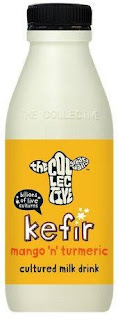
Kefir - a fermented milk product manufactured from kefir grains

Kefir is a fermented milk beverage produced by the action of bacteria and yeasts. The milk fermentation is achieved by the use of kefir grains, a cluster of microorganisms held together by a polysaccharide matrix named kefiran.

Kefir grains range in size from 1 to 4 cm in length and look like small cauliflower florets in shape (irregular and lobed-shaped) and color (from white to light yellow).

This beverage that has been consumed for thousands of years and has a significant place among functional foods. Kefir originates from the northern slopes of the Caucasus Mountains and is believed to date back at least 1000 years.

Kefir consumption is associated with a wide array of nutraceutical benefits, including anti-inflammatory, anti-oxidative, anti-cancer, anti-microbial, antidiabetic, anti-hypertensive, and anti-hypercholesterolemic effects.

Kumiss is similar to the kefir; however, it is prepared by a liquid starter culture in contrast to the solid kefir grains used in kefir production.

Although kefir been consumed for thousands of years, it has recently gained popularity in relation to novel biotechnological applications, with different fermentation substrates being tested as non-dairy functional beverages.

Kefir is an acidic, low-alcohol probiotic beverage obtained from the fermentation of milk at ambient temperatures. A vast variety of different species of organisms forming the kefir grains, comprising yeast and bacteria, have been isolated and identified. The Lactobacillus genus is the most frequent throughout the fermentation period.

Others including species belonging to Lactococcus, Leuconostoc, and Acetobacter genera and yeasts. The yeast isolates belonging to species of the Kluyveromyces, Candida, Torulaspora, Pichia, Cryptococcus, Debaromyces, Kazachstania, Lachancea, Torulaspora, Zygosaccharomyces, Trichosporon and Saccharomyces genera.

The microbiota of kefir grains may differ depending on the geographical origin of the kefir grains, which are strictly connected to the climate conditions.
Kefir - a fermented milk product manufactured from kefir grains

Thursday, December 16, 2021

Kumiss - traditional milk beverage

Milk can be fermented by inoculating fresh milk with the appropriate bacteria and incubating it at a temperature that favors their growth.

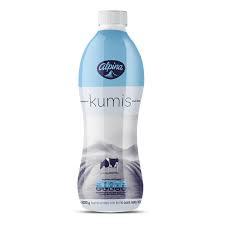
Kumiss, prepared in dry inland Asia, is a traditional milk beverage containing about 2% alcohol, prepared by fermenting raw mare’s milk with lactic acid bacteria and yeast. Kumiss is also known by other names like koumiss, kumis, kymis, kymmyz.

It is an ancient beverage which Scythian tribes (Central Asia Steppes) used to drink some 25 centuries ago is an alcoholic beverage made from fermented mare's milk. This product is unique compared to other dairy foods, due to its mare's milk origin.

The characteristic feature of Kumiss is the fermentation of raw milk, involving the processing of only horse milk.

Kumiss is similar to the kefir; however, it is prepared by a liquid starter culture in contrast to the solid kefir grains used in kefir production.

Kumiss is made by fermenting mare's milk while stirring or churning. It is a dairy product involving lactic acid and alcoholic fermentation, which implies that during the fermentation, Lactobacillus bulgaricus acidifies the milk, and Saccharomyces lactis turns it into a carbonated and mildly alcoholic drink.

Finished kumis is milky white/greyish liquid, sourish alcoholic flavor and frizzy appearance. It is a beverage which does not contain curd particles in it. It has a unique taste, odour and aroma. No foreign odor is available in kumiss other than alcohol odor.

The quality of Kumiss is markedly influenced by factors affecting the quality of horse milk: grass eaten by horses, habitat and microclimate conditions of the herders’ home (temperature).

Kumiss possesses diuretic properties and helps in preventing intestinal putrefaction. The vitamin C level in Kumiss was 8-11 mg/100 ml. Kumiss was a valuable source of vitamin C supply for herders who did not ingest vegetables or fruit.
Kumiss - traditional milk beverage

Wednesday, April 25, 2018

Alcoholic drinks: Busaa

Ordinary maize or finger millet are not popular foods but when fermented to busaa they are very popular. Busaa is an indigenous fermented food which is popular in western Kenya and is consumed as a refreshing drink.

 In Kenya, busaa is one of the traditional fermented alcoholic drinks that is common during social occasions. Busaa is a fermented opaque cereal beer fermented using a mixture of maize flour and water to form a stiff dough, and finger millet malt (kimera) which is incubated for three or four days at room temperature. Because busaa is not clarified, it contains residues of the maize and millet as well as microorganisms that develop; it is very rich in nutrients, calories, some protein and B vitamins.

After the fermentation, busaa is consumed immediately due to its short shelf-life or it can be distilled to produce chang’aa (a local spirit).

Fermentation of busaa is carried out by microorganisms present in the maize flour, adjuncts, water, equipment, and environment or introduced by the brewers through handling. The final pH of the busaa is approximately 3.5. Busaa is characterized by an acidic, alcoholic and roasted flavour with a smooth texture.
Alcoholic drinks: Busaa

Monday, February 19, 2018

Beverage of talla

Talla is an Ethiopian alcoholic beverage generally served on holidays and at wedding ceremonies. Talla is a tan to dark brown home-processed beer with smokey flavor. Amhara talla is hopped and concentrated; Gurage talla is a delicately aromatized with a variety of spice.

Oromo galla talla is unhopped, thick, and sweet. Talla is used as solvent for tapeworm medicine and other rugs.

Maize or mixes of grains are used as raw materials while barley or wheat malt is used for conversion of the starch to fermentable sugars.

Hops (Rhamunus prionoides) are geisho are added as a flavoring agent. The smoky flavor originates from the toasted, milled and boiled cereal grain. In the production of talla, of which various types exist, powdered hop leaves and water are put in a fermentation vessel and allowed to stand for about three days.

Ground barley or wheat malt and pieces of flat bread baked to burning on the outside are added. On the fifth day, hop stems are added in addition to cereal flour made by milling sorghum which is first boiled and then toasted. Water is added and fermentation stands for two days before filtered and ready for consumption.
Beverage of talla

Thursday, September 21, 2017

Masato from yuka

Masato is a fermented drink based on yuka, which is a big tuber with lots of starch and very little sugar. It is equivalent of homemade beer.

So native Peruvians boil, peel and chew the yuka and let it sit for a few days. First they grate the roots and wash water through the coarse mixture, sieving it thoroughly. This removes a poison, a form of hydrocyanic acid, which occurs naturally in the tuber.
After grating, it is cooked and crushed with a wooden spoon. Normally, the women will around the pot, mashing the cooked tuber. The cooked yuka is then chewed into a paste by women and spit out into a large bowl or kettle. This operation is repeated as many times as is necessary to turn the yuka into masato.

The whole is now mixed with the hands. The enzymes in their saliva break down the starch and turn it into sugar—perfect for hungry yeast. After four days, the paste has fermented. It’s mixed with water, and then served. The drink, a weak alcohol, is traditional consumed in enormous quantities.
Masato from yuka

Friday, April 21, 2017

Chicha made from corn

Chicha literally juice is a highly esteemed drink among South American Indians. It is a alcoholic drink particularly consumed in the Andes, where brewing started with the Incas. Chicha can be prepared from many seeds, roots or fruits such as quinoa, peanuts, grapes, oca and the berries of the mulli tree.

Chicha de jora, made from corn, is without a doubt the favorite of the Indians. It played an important role in the life of the Incas, not only as a source of nourishments but also in ritual and religious practices.
Chicha de jora
Virgin women, in the tradition of modern Catholic nuns and the vestal virgins of ancient Rome, lived next to the temples where they brewed chicha and served it to the sun in a gold cup every morning, as well as to the priests.

The women made the chicha by chewing the corn and spitting it into containers. The ptyalin enzymes in the saliva broke down the corn starches into fermentable sugars. It was believed that older women’s saliva made for a tastier and more potent brew.

 The color of chicha varies depending on the type of corn which from it is made, ranging from pale yellow to burgundy red. When made from yellow sweet maize, it has a pale straw color and milky appearance.
Chicha made from corn

Tuesday, October 11, 2016

Strawberry wine

Fruit wines are generally prepared by yeast (Saccharomyces cerevisiae) fermentation of sugared juices or diluted concentrates. Fruit wines volatiles include aroma compounds at are already present in the fresh fruit and remain unchanged during processing and aging.

Strawberry wine of good quality has the appealing color of premium rose wine. When frozen berries are employed to make wine, these are first thawed and the juice is extracted.

The juice is ameliorated to 22 °Brix by the addition of cane-sugar added in stages e.g. 25% of the total sugar added to prepare the must and the rest during fermentation.

Sweetening before aging preserves flavor and color but the sweetened wine must be stored under refrigeration to prevent refermentation.

Strawberry wine is difficult to filter. Addition of a peptic enzyme would be desirable with this variety. Treatment with enzymes mainly pectinases, inhibits polymerization and increases color extraction and color density in strawberry wine.

The composition and maturity of the fruits and mold contamination affect the quality of the wine. But over-ripe fruits with higher anthocyanins and total phenolics, give wines with better color than fully ripe fruits.
Strawberry wine

Saturday, June 18, 2016

Korean yakju and takju

The ethnic Korean alcoholic beverages yakju and takju were originally made from rice but are now made by saccharifying wheat, barley, or corn with mold enzymes and fermenting the sugars to ethanol with yeasts.

In addition, broomcorn millet, foxtail millet and great millet are used for the fermentations. The lower or diluted concentration of yakju is known as takju. During yakju preparation, steamed rice is cooled and then mixed with nuruk and fermented.

Nuruk, cake made of malted and partially fermented grain, is the starter for yakju and takju. Presently, the substrate for nuruk is wheat but historically it was rice. The fermentation process is repeated by addition of rice and water to give 1st brewed liquor, 2nd brewed liquor, 3rd brewed liquor even up to a 12th brewed liquor. The liquid pressed from the fermenting mass is filtered under pressure, and is aged and bottled.

Yakju and takju are ancient beverages popular among the common people. Yakju originally was consumed by upper classes and takju, by peasants; now both are consumed by farmers and other low-income groups.
Korean yakju and takju 

Sunday, May 01, 2016

Biotechnology in beverage production

Biotechnology inventions are the sequel of application of human ingenuity to the biological processes. Biotechnology has been broadly defined as the utilization of biologically derived molecules, structures, cells or organisms to carry out a specific process. This is true of many established food processes – for example, cheesemaking and brewing.

The impact of biotechnology on the food and beverage industries can be anticipated in two directions:
*Agronomic: Increased plant and animal yields, extended growth range and environment form which the farmers will mainly benefits.
*Non-agronomic: Improving plants and micro-organisms to provide benefits to the food producer, retailer or consumer.

Beverage production is among the oldest, though quantitatively most significant, applications of biotechnology method based on the use of microorganisms and enzymes.

The seemingly minor alterations can have profound effects. The amount of an important flavor, color or enzyme may be increased many fold. It can allow crops to grow under marginal to poor conditions.

With a few exceptions, most short-term results of modern biotechnical applied to beverage production will be invisible to the consumer’s eye. However, indirect effects on existing product, such as cost savings and product improvements, will be far reaching.

Beverage production now exploits all the various features of first and second –generation biotechnology:
*Screening and selective improvements of microorganisms
*Microorganism mutations
*Microorganisms use in genetic engineering methods
*Fermentation control
*Control of enzymatic processes including industrial plants
*Use of soluble enzymes and immobilized enzyme reactors
*Development of waste treatment processes etc.
Biotechnology in beverage production

Wednesday, April 30, 2014

Beer from barley

Beer is the result of using grain and water to make an alcoholic beverage. Styles vary depending on the type of grain used, the level of toasting of the grain and the type of yeast used.

While other grain can be utilized in the process, barley has special properties that make it a necessary ingredient.

The barley plant belongs to the Gramineae, the family of grasses. Barley is cultivated mostly for animal feed and a key ingredient in beer.

Barley bread and beer made from fermented barley were everyday nourishment for ancient Egyptian slaves who built the pyramids.

In its raw form, barley has no real fermentable material, and has to go through a special process called malting to become the sugar source for beer.

In the making of beer, whole unrefined barley is soaked until it sprouts. During soaking, proteins within the bran convert to enzymes that change starches to sugars.

Enzymatic changes inside the grain create a starch reservoir as an energy source for the plant during the period of its early development.

Next the barley is dried to prevent further sprouting and is lightly cooked, the resulting malt is crushed and combined with warm water, and the conversions of starch to sugar begin.

The enzymes hydrolyze the polysaccharides and break them down into simple sugars such as glucose and maltose. This process is called mashing.

Addition of yeast to malt leads to fermentation, which results in alcohol. In beer production, hops are added to the barley malt.
Beer from barley

Friday, March 14, 2014

Fermented beverage of boza

Boza is a traditional Turkish beverage made by yeast and lactic acid bacteria fermentation of millet, cooked maize, wheat, or rice semolina/flour.

It has thick texture, light beige color and specific flavor characteristic of the Balkans, Asia Minor and the Caucasian region.

The name, boza, in Turkish comes from the Persian word, buze, meaning millet. It is known that Central Asian Turks invented the beverage. Boza enjoyed it golden age during the Ottoman Empire, as the beverage was spread to all the occupied lands.

It is currently enjoying a new fame with European as a bust booster. It is best enjoyed with a banitsa, a pastry snack.

Traditionally, it has been touted as having an ability to augment the milk production of lactating women.

The medical explanation could be that boza raises the prolaction hormones that help milk production, and perhaps leading to breasts enlarging.

The alcohol content is generally low, less than 1% but boza from Egypt can contain up to 7%.
Fermented beverage of boza

Wednesday, May 16, 2012

Perry drinks

Perry is an alcoholic drink made by fermenting the juice of pears. More specifically, perry is preferentially made from special pear varieties known as perry pears.

It is similar to cider, in that it is made using a similar process and often has a similar alcoholic content, around 8% alcohol by volume.

These pears are high in tannins and acids, providing the complex flavors associated with perry in addition to serving as a preservative. Pears for making perry should be fully ripe before they are ground.

The liquor made from this fruit is pale, sweet, yet remarkable fine, and of a strong body.

It is wholesome and pleasant liquor, and has sometimes been made so excellent as to pass for Champagne.

Perry is more often made sparkling which may come from secondary fermentation in sealed tanks or by carbonation.

Perry had been common for centuries, in Britain, particularly the West Country and Wales; and France especially Normandy and Anjou.
Perry drinks

Top articles this week

Food Processing RSS

DBR - Process Technology News

Science of Nutrition RSS