Kefir is a fermented milk beverage produced by the action of bacteria and yeasts. The milk fermentation is achieved by the use of kefir grains, a cluster of microorganisms held together by a polysaccharide matrix named kefiran.
Kefir grains range in size from 1 to 4 cm in length and look like small cauliflower florets in shape (irregular and lobed-shaped) and color (from white to light yellow).
This beverage that has been consumed for thousands of years and has a significant place among functional foods. Kefir originates from the northern slopes of the Caucasus Mountains and is believed to date back at least 1000 years.
Kefir consumption is associated with a wide array of nutraceutical benefits, including anti-inflammatory, anti-oxidative, anti-cancer, anti-microbial, antidiabetic, anti-hypertensive, and anti-hypercholesterolemic effects.
Kumiss is similar to the kefir; however, it is prepared by a liquid starter culture in contrast to the solid kefir grains used in kefir production.
Although kefir been consumed for thousands of years, it has recently gained popularity in relation to novel biotechnological applications, with different fermentation substrates being tested as non-dairy functional beverages.
Kefir is an acidic, low-alcohol probiotic beverage obtained from the fermentation of milk at ambient temperatures. A vast variety of different species of organisms forming the kefir grains, comprising yeast and bacteria, have been isolated and identified. The Lactobacillus genus is the most frequent throughout the fermentation period.
Others including species belonging to Lactococcus, Leuconostoc, and Acetobacter genera and yeasts. The yeast isolates belonging to species of the Kluyveromyces, Candida, Torulaspora, Pichia, Cryptococcus, Debaromyces, Kazachstania, Lachancea, Torulaspora, Zygosaccharomyces, Trichosporon and Saccharomyces genera.
The microbiota of kefir grains may differ depending on the geographical origin of the kefir grains, which are strictly connected to the climate conditions.
Kefir - a fermented milk product manufactured from kefir grains
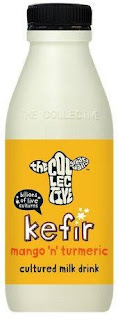
Technically, any liquid intended for drinking is a beverage so named by a word derived from French and Latin verbs meaning ‘to drink.’ Healthy beverages are beverages with health benefits that attribute by its nutritional value. The use of healthy beverage for promoting health and relieving symptom is as old as the practice of medicine.
Showing posts with label milk. Show all posts
Friday, January 07, 2022
Wednesday, November 03, 2021
Kumiss: The ancient to the modern world
Koumiss is a traditional milk beverage produced from fermentation of mares’ milk by indigenous microorganisms. Koumiss is also known by other names like koumiss, kumiss, kumis, kymis, kymmyz.
In Central Asia and China, kumis is a traditionally fermented drink made from the milk of horses and it is one of the most important basic foodstuffs.
For centuries, human civilization has used different approaches to preserve and to prepare food products. Probably the longest part of this history was based on empirical knowledge, gained by experience without former knowledge either of mechanisms or the scientific basis of fermentation.
Historically, the fermentation of milk can be traced back to around 10,000 B.C. Fermentation takes place through the natural microflora present in milk.
Aristotle (322 BC) reported the existence of a dairy product in Mongolia that processed mare’s milk to transform it into a fermented product.
According to Herodotus kumis is the ancient beverage which Scythian tribes (Central Asia Steppes) used to drink some 25 centuries ago and it is an alcoholic beverage made from fermented mare's milk.
The Scythians were the first of numerous waves of warriors on horses who swept westward over the vast Eurasian steppes. Scythians belong to a group generally categorized as the “steppe nomads”, who share a similar lifestyle of nomadic pastoralism centered on the use of the horse that remained largely unchanged for thousands of years.
With the advent of scientific methods, the different classes of microorganisms present in the fermented dairy products have been detected. In the middle of the 19th century, in south Russia, mainly in the region of Samara and Orenburg but also in Moscow and Saint Petersburg, there were centers successfully using kumis therapy in treating lung diseases, mainly tuberculosis, and in strengthening the body.
Today, commercial koumiss is made from cow's milk and additional sugar to better replicate the alcohol content.
Kumiss: The ancient to the modern world
In Central Asia and China, kumis is a traditionally fermented drink made from the milk of horses and it is one of the most important basic foodstuffs.
For centuries, human civilization has used different approaches to preserve and to prepare food products. Probably the longest part of this history was based on empirical knowledge, gained by experience without former knowledge either of mechanisms or the scientific basis of fermentation.
Historically, the fermentation of milk can be traced back to around 10,000 B.C. Fermentation takes place through the natural microflora present in milk.
Aristotle (322 BC) reported the existence of a dairy product in Mongolia that processed mare’s milk to transform it into a fermented product.
According to Herodotus kumis is the ancient beverage which Scythian tribes (Central Asia Steppes) used to drink some 25 centuries ago and it is an alcoholic beverage made from fermented mare's milk.
The Scythians were the first of numerous waves of warriors on horses who swept westward over the vast Eurasian steppes. Scythians belong to a group generally categorized as the “steppe nomads”, who share a similar lifestyle of nomadic pastoralism centered on the use of the horse that remained largely unchanged for thousands of years.
With the advent of scientific methods, the different classes of microorganisms present in the fermented dairy products have been detected. In the middle of the 19th century, in south Russia, mainly in the region of Samara and Orenburg but also in Moscow and Saint Petersburg, there were centers successfully using kumis therapy in treating lung diseases, mainly tuberculosis, and in strengthening the body.
Today, commercial koumiss is made from cow's milk and additional sugar to better replicate the alcohol content.
Kumiss: The ancient to the modern world
Labels:
central Asia,
fermented milk,
history,
koumiss,
kumis,
milk
Thursday, October 27, 2016
What is evaporated milk?
Evaporated milk is the commercial name of sterilized, unsweetened condensed cow’s milk from which a considerable portion of the water has been removed. The milk is sealed in cans and heat sterilized.
Evaporated milk, like sweetened condensed milk, was first developed in the early 19th century and has been available as a canned product for well over a century now. It is a product with high solids content and its processing includes standardization, homogenization and concentration and sterilization.
Evaporation involves removal of water by boiling, remaining after the separation of the vapors generate upon boiling.
The FDA standard for evaporated milk specifies a minimum of 6.5% milk fat, 16.5% milk solid fat, 23% total milk solids and indicates a specified quantity of added vitamin D or vitamin A per fluid ounce.
Maillard reactions are very important for the flavor and color development in evaporated milk. Reducing sugars produce brown colors that are desirable and important in some cases, such as when evaporated milk is used in coffee.
What is evaporated milk?
Evaporated milk, like sweetened condensed milk, was first developed in the early 19th century and has been available as a canned product for well over a century now. It is a product with high solids content and its processing includes standardization, homogenization and concentration and sterilization.
Evaporation involves removal of water by boiling, remaining after the separation of the vapors generate upon boiling.
The FDA standard for evaporated milk specifies a minimum of 6.5% milk fat, 16.5% milk solid fat, 23% total milk solids and indicates a specified quantity of added vitamin D or vitamin A per fluid ounce.
Maillard reactions are very important for the flavor and color development in evaporated milk. Reducing sugars produce brown colors that are desirable and important in some cases, such as when evaporated milk is used in coffee.
What is evaporated milk?
Labels:
dairy,
definition,
evaporated milk,
milk,
processing
Tuesday, October 13, 2015
How is milk spray dried?
Dry milk was referred to as milk powder until the mid 1960s, when the designation was changed by the American Dry Milk Institute to dry milk in the United States.
Drying be done by spraying atomized droplets of milk into chamber through which heated air is circulated (spray drying).
Milk to be spray dried should receive at least a minimum temperature pasteurization before evaporation and further processing, though higher temperature heat treatments are commonly used in order to influence product characteristics.
In the more modern and more widely used process, concentrated milk is sprayed through an atomizer into the top of a large chamber with air at 120 – 205 °C blown in from the base. The particles dry rapidly and are collected at the bottom of the chamber.
Dried milk (usually the spray dried type that contains about 5% of moisture) may be re-humidified to slightly higher moisture content after drying.
This treatment agglomerates the fine milk particles to form clumps of milk powder, which results in a powder that dissolves or disperses in water much more rapidly that the finely powdered dried milk. It is therefore, considered to be an instantly double product.
Original spray dryer designs were for single stage drying in which all of the moisture is removed in the main drying chamber. Such designs are now obsolescent and have been replaced by two and three stage dryers in which the drying process is completed in fluidized bed dryers.
How is milk spray dried?
Drying be done by spraying atomized droplets of milk into chamber through which heated air is circulated (spray drying).
Milk to be spray dried should receive at least a minimum temperature pasteurization before evaporation and further processing, though higher temperature heat treatments are commonly used in order to influence product characteristics.
In the more modern and more widely used process, concentrated milk is sprayed through an atomizer into the top of a large chamber with air at 120 – 205 °C blown in from the base. The particles dry rapidly and are collected at the bottom of the chamber.
Dried milk (usually the spray dried type that contains about 5% of moisture) may be re-humidified to slightly higher moisture content after drying.
This treatment agglomerates the fine milk particles to form clumps of milk powder, which results in a powder that dissolves or disperses in water much more rapidly that the finely powdered dried milk. It is therefore, considered to be an instantly double product.
Original spray dryer designs were for single stage drying in which all of the moisture is removed in the main drying chamber. Such designs are now obsolescent and have been replaced by two and three stage dryers in which the drying process is completed in fluidized bed dryers.
How is milk spray dried?
Labels:
milk,
milk powder,
processing,
spray drying
Friday, February 21, 2014
Caffè macchiato
Italians are crazy about their coffee and were the first Europeans to adopt the Middle Eastern drink.
A caffè macchiato is identical to an espresso macchiato, but should not be confused with a latte macchiato.
A latte macchiato is steamed milk ‘marked’ with espresso, as its Italian suggest, whereas a caffè macchiato is an espresso ‘marked’ with a spoonful of milk foam. Macchiato literally mean ‘spotted’ in Italian.
It is normal for caffè macchiato: dot the surface of an espresso, in the usually small cup, with just a tablespoon or two of the milk, aiming to leave a brown ring visible around the edges.
Caffè macchiato
A caffè macchiato is identical to an espresso macchiato, but should not be confused with a latte macchiato.
A latte macchiato is steamed milk ‘marked’ with espresso, as its Italian suggest, whereas a caffè macchiato is an espresso ‘marked’ with a spoonful of milk foam. Macchiato literally mean ‘spotted’ in Italian.
It is normal for caffè macchiato: dot the surface of an espresso, in the usually small cup, with just a tablespoon or two of the milk, aiming to leave a brown ring visible around the edges.
Caffè macchiato
Labels:
caffè,
caffè macchiato,
coffee,
milk
Thursday, February 02, 2012
Goat milk
Goat milk differs from cow or human milk in higher digestibility, distinct alkalinity, higher buffering capacity and certain therapeutic values in human medicine and nutrition.
It is naturally homogenized, with smaller fat molecules evenly suspend throughout the milk.
The gross chemical composition of goat’s milk can vary considerably and the total solids may range between 11.3 and 15, g /100g; the main cases of this variation are breed, stage of lactation, geographical location and diet.
In gross characterization of milk fat, goat milk contains 97-99% of free lipids and 1-3% bound lipids of total fat.
Free lipids of goat milk contained 96.8% triglycerides, 2.2% diglycerides and o.9% monoglyceride, whereas bound lipids contained 46.8% neutral lipids and 53.2% polar lipids.
Goat milk contains slightly less total casein but higher non-protein nitrogen than the cow counterpart.
Milk from goats is also high in vitamin A and niacin.
Goat milk taste varies a great deal by bred, by feed stuffs, by stage of lactation, by the age of the milk and especially by the way it’s handled.
Goat milk is more complex in flavor than cow’s milk. and is gaining popularity in the United States for those with allergies to cow’s milk and for those who choose to avoid cattle byproducts.
It is naturally homogenized, with smaller fat molecules evenly suspend throughout the milk.
The gross chemical composition of goat’s milk can vary considerably and the total solids may range between 11.3 and 15, g /100g; the main cases of this variation are breed, stage of lactation, geographical location and diet.
In gross characterization of milk fat, goat milk contains 97-99% of free lipids and 1-3% bound lipids of total fat.
Free lipids of goat milk contained 96.8% triglycerides, 2.2% diglycerides and o.9% monoglyceride, whereas bound lipids contained 46.8% neutral lipids and 53.2% polar lipids.
Goat milk contains slightly less total casein but higher non-protein nitrogen than the cow counterpart.
Milk from goats is also high in vitamin A and niacin.
Goat milk taste varies a great deal by bred, by feed stuffs, by stage of lactation, by the age of the milk and especially by the way it’s handled.
Goat milk is more complex in flavor than cow’s milk. and is gaining popularity in the United States for those with allergies to cow’s milk and for those who choose to avoid cattle byproducts.
Goat milk
Wednesday, January 04, 2012
Minerals in Milk
About 87% of the weight of milk is water. The water carries in solution milk sugar, mineral, and water soluble vitamin.
Suspended in the milk are the fat, casein and certain mineral.
Milk contains about 30 different minerals, but only a few of them are represent in greater than trace amounts.
The major portion of the mineral is composed of the chloride and oxides of potassium, calcium, and phosphorus.
It is interest to note that these three elements are in greater concentration in milk than in blood; thus, the mammary gland exerts a selective action to concentrate these elements.
A fact frequently overlooked is the greater weight percentage of the potassium over that of calcium. Calcium constitutes about 30 percent of the total minerals in milk.
This kind of information can be used to detect injured udders because in the injured udder the composition of the milk becomes more like that of the blood.
Milk from cows suffering from mastitis contains a higher sodium and chloride than normal milk.
A chloride content in milk excess of .14% suggests the possibility of mastitic milk. All cases of high chloride content in milk are not due to disease.
Milk secreted toward the end of lactation and colostrums secreted at the beginning of lactation contain more sodium and chloride than normal milk.
Phosphorus constitutes about 15% of the total minerals in milk, about 50% of the total phosphorus is associated with the casein micelles which serve as a major carrier for calcium and phosphorus.
However, milk is lacking of magnesium. Magnesium is the protector of kidneys.
Milk also low in mineral of iron.
There are calcium, magnesium and iron enriched milks available in the market. These types of milk are designed to supply the mineral necessity of mothers during breastfeeding and pregnancy or infants.
Calcium and magnesium are involved in bone development and maintenance and iron can help prevent and eradicate iron deficiency anemia.
Minerals in Milk
Suspended in the milk are the fat, casein and certain mineral.
Milk contains about 30 different minerals, but only a few of them are represent in greater than trace amounts.
The major portion of the mineral is composed of the chloride and oxides of potassium, calcium, and phosphorus.
It is interest to note that these three elements are in greater concentration in milk than in blood; thus, the mammary gland exerts a selective action to concentrate these elements.
A fact frequently overlooked is the greater weight percentage of the potassium over that of calcium. Calcium constitutes about 30 percent of the total minerals in milk.
This kind of information can be used to detect injured udders because in the injured udder the composition of the milk becomes more like that of the blood.
Milk from cows suffering from mastitis contains a higher sodium and chloride than normal milk.
A chloride content in milk excess of .14% suggests the possibility of mastitic milk. All cases of high chloride content in milk are not due to disease.
Milk secreted toward the end of lactation and colostrums secreted at the beginning of lactation contain more sodium and chloride than normal milk.
Phosphorus constitutes about 15% of the total minerals in milk, about 50% of the total phosphorus is associated with the casein micelles which serve as a major carrier for calcium and phosphorus.
However, milk is lacking of magnesium. Magnesium is the protector of kidneys.
Milk also low in mineral of iron.
There are calcium, magnesium and iron enriched milks available in the market. These types of milk are designed to supply the mineral necessity of mothers during breastfeeding and pregnancy or infants.
Calcium and magnesium are involved in bone development and maintenance and iron can help prevent and eradicate iron deficiency anemia.
Minerals in Milk
Tuesday, August 09, 2011
Dairying in England from late 16th to end of 17th century
From the late sixteenth century conditions of life for most country people began a slow deterioration under the impact of sharply rising prices, periods of dearth, and the beginning of enclosures in southern England.
Labourer’s probate inventories of the late seventeenth century now showed a steep fall in the numbers keeping cows except in the pastoral North, where 80 percent still did so, but in the Midlands the proportions fell to 31.6 percent, in the East to 21.9 percent and in the West to only 4.2 per cent.
For the southern labourer the traditional ‘white meat’ were now dearer and scarcer, and although the total number of cows increased in the seventeenth century more were now kept on large farms, where the milk was turned into butter and cheese for sale in the markets.
A growing urban market led to the expansion of commercial dairying in the vicinity of towns, especially London, as well as the practice of cow-keeping within the towns themselves.
Dairymen were normally both producers and retailers. In London, cows in Tothill Fields, Lincoln’s Inn Fields, Islington and elsewhere were milk by milkmaids around 4 or 5 am, the milk carried in pails suspend from a yoke and either sold from fixed shops or hawked through the streets.
It was regarded as suitable for young children after weaning, old people and invalids, hardly for healthy adults, though whey was considered very wholesome and London had several ‘whey houses’, which were sufficiently fashionable to be patronized by Pepys: junkets and syllabubs – warm milk frothed over fruit, wine or spice- were also popular.
By end of seventeenth century milk was being added to the new, costly hot beverages tea, coffee and chocolate: tea was at first drink, Chinese fashion, without milk, but by 1700 milk or cream (poured in first to prevent cracking the delicate china) was usual, and the bitterness of coffee and chocolate was found to be softened by cream and sugar.
Dairying in England from late 16th to end of 17th century
From the late sixteenth century conditions of life for most country people began a slow deterioration under the impact of sharply rising prices, periods of dearth, and the beginning of enclosures in southern England.
Labourer’s probate inventories of the late seventeenth century now showed a steep fall in the numbers keeping cows except in the pastoral North, where 80 percent still did so, but in the Midlands the proportions fell to 31.6 percent, in the East to 21.9 percent and in the West to only 4.2 per cent.
For the southern labourer the traditional ‘white meat’ were now dearer and scarcer, and although the total number of cows increased in the seventeenth century more were now kept on large farms, where the milk was turned into butter and cheese for sale in the markets.
A growing urban market led to the expansion of commercial dairying in the vicinity of towns, especially London, as well as the practice of cow-keeping within the towns themselves.
Dairymen were normally both producers and retailers. In London, cows in Tothill Fields, Lincoln’s Inn Fields, Islington and elsewhere were milk by milkmaids around 4 or 5 am, the milk carried in pails suspend from a yoke and either sold from fixed shops or hawked through the streets.
It was regarded as suitable for young children after weaning, old people and invalids, hardly for healthy adults, though whey was considered very wholesome and London had several ‘whey houses’, which were sufficiently fashionable to be patronized by Pepys: junkets and syllabubs – warm milk frothed over fruit, wine or spice- were also popular.
By end of seventeenth century milk was being added to the new, costly hot beverages tea, coffee and chocolate: tea was at first drink, Chinese fashion, without milk, but by 1700 milk or cream (poured in first to prevent cracking the delicate china) was usual, and the bitterness of coffee and chocolate was found to be softened by cream and sugar.
Dairying in England from late 16th to end of 17th century
Wednesday, March 31, 2010
When was Milking Started?
For million of years breast milk has been the first beverage. Replacement with animal milk carried tremendous implications and potential nutritional advantages.
The first irrefutable evidence for milking domesticated livestock, and by implication, human use of milk and the manufacture of dairy products, dates to approx 4000 BC and is based on Stone Age art produced by the central Sahara region of Africa.
By 1500 BC, milk use was widely distributed. It has been described in the Charaka Samhita:
“Cow milk has been properties: sweet, cold, soft, fatty, viscous, smooth, slim, heavy, dull, and clear. Buffalo milk is heavier and colder than that from cow: useful to cure sleeplessness and excessive digestive power.
Cow milk is rough, hot, slightly saline, light and prescribed for hardness in the bowels, works against worms.... Milk from one hooved animals (donkey, horse) is hot, slightly, sour, saline, light promotes strength, stability alleviates vata in extremities. Goat milk is astringent...”
Anthologists, geographers and physicians have written on the physiologic and dietary implications of humans using animal milks an use or nonuse of flavored particular societies.
With our ability of feed grass to livestock and the use the milk in its raw form or as fermented cheese, humans expanded into new areas of habitation and increased population density.
The majority of other human population – following the standard mammalian pattern – lose the ability to maintain lactase production and therefore, cannot digest fresh animal milks easily, a pattern evidenced by most Asian, West Africans, Sothern European Mediterranean and most Central and South Americans.
However, some human populations now maintain lactase production throughout their lives, a physiologic characteristic that kinks peoples and cultures as diverse as east African cattle pastoralists (e.g., the Masai, Suk an Turkama) with northern European Scandinavian.
When was Milking Started?
For million of years breast milk has been the first beverage. Replacement with animal milk carried tremendous implications and potential nutritional advantages.
The first irrefutable evidence for milking domesticated livestock, and by implication, human use of milk and the manufacture of dairy products, dates to approx 4000 BC and is based on Stone Age art produced by the central Sahara region of Africa.
By 1500 BC, milk use was widely distributed. It has been described in the Charaka Samhita:
“Cow milk has been properties: sweet, cold, soft, fatty, viscous, smooth, slim, heavy, dull, and clear. Buffalo milk is heavier and colder than that from cow: useful to cure sleeplessness and excessive digestive power.
Cow milk is rough, hot, slightly saline, light and prescribed for hardness in the bowels, works against worms.... Milk from one hooved animals (donkey, horse) is hot, slightly, sour, saline, light promotes strength, stability alleviates vata in extremities. Goat milk is astringent...”
Anthologists, geographers and physicians have written on the physiologic and dietary implications of humans using animal milks an use or nonuse of flavored particular societies.
With our ability of feed grass to livestock and the use the milk in its raw form or as fermented cheese, humans expanded into new areas of habitation and increased population density.
The majority of other human population – following the standard mammalian pattern – lose the ability to maintain lactase production and therefore, cannot digest fresh animal milks easily, a pattern evidenced by most Asian, West Africans, Sothern European Mediterranean and most Central and South Americans.
However, some human populations now maintain lactase production throughout their lives, a physiologic characteristic that kinks peoples and cultures as diverse as east African cattle pastoralists (e.g., the Masai, Suk an Turkama) with northern European Scandinavian.
When was Milking Started?
Subscribe to:
Posts (Atom)
Top articles this week
-
Theanine is a unique free amino acid found only in tea leaves. It is the analogue of glutamine. Theanine is found in every part of the t...
-
Since ancient times, pomegranate has been known for its medicinal properties. Most of those beneficial effects have been attributed to the p...
-
Tea, renowned for its numerous health benefits ranging from antioxidants to artificial coloring, owes much of its character to the presence ...
-
Safflower is a highly branched, herbaceous, thistle-like annual plant with many long sharp spines on the leaves. It is a highly branched pla...
-
Barley Grass Juice Barely grass juice, also known as green barley juice, is rich in vitamins C, B1, B2, B3, B6 and C, as well as as biotin, ...
